Chestnuts Park wedding flowers guide for Seven Sisters
Posted on 20/09/2026
Planning wedding flowers around Chestnuts Park and Seven Sisters sounds simple until you start matching bouquets, buttonholes, table arrangements, timing, and venue logistics all at once. Then it becomes a real puzzle. If you want flowers that look elegant, travel well, and feel right for your day, this Chestnuts Park wedding flowers guide for Seven Sisters will walk you through the details without the fluff.
There is a lot to think about: seasonal blooms, colour palettes, delivery timing, weather, photography, guest flow, and how everything ties together in a local London setting. Chestnuts Park has its own character, and Seven Sisters brings that lively, urban edge that calls for flowers with personality. In practice, that means choosing arrangements that suit the moment, the space, and your budget rather than just picking something pretty on the day.
Below, you will find a practical, human guide to what works, what to avoid, and how to plan wedding flowers with confidence. A little less stress. A lot more clarity.
Table of Contents
- Why Chestnuts Park wedding flowers guide for Seven Sisters Matters
- How Chestnuts Park wedding flowers guide for Seven Sisters Works
- Key Benefits and Practical Advantages
- Who This Is For and When It Makes Sense
- Step-by-Step Guidance
- Expert Tips for Better Results
- Common Mistakes to Avoid
- Tools, Resources and Recommendations
- Law, Compliance, Standards, or Best Practice
- Options, Methods, or Comparison Table
- Case Study or Real-World Example
- Practical Checklist
- Conclusion
- Frequently Asked Questions
Why Chestnuts Park wedding flowers guide for Seven Sisters Matters
Wedding flowers do more than decorate a space. They set the tone the moment guests arrive, shape how your photos feel, and quietly pull the whole day together. Around Chestnuts Park and Seven Sisters, that matters even more because the setting can shift from open, leafy park surroundings to busy London streets in a few minutes. Your flowers need to work in both worlds.
Chestnuts Park-style wedding planning often means dealing with practical details that couples underestimate at first. Can the bouquet survive travel in warm weather? Will the centrepieces look full enough in a daylight space? Do the bridesmaids need smaller arrangements because the aisle is narrow? These are not glamorous questions, admittedly, but they make a visible difference.
There is also the local feel to consider. Seven Sisters has a multicultural, city-wedding energy that often suits either crisp minimal designs or bold, expressive flowers. That opens up good options. You are not locked into one style. You can go soft and romantic, clean and modern, or rich and textured. The point is to choose flowers that look intentional rather than simply "nice enough."
Expert takeaway: the best wedding flowers for Chestnuts Park are the ones that fit the setting, hold up during the day, and photograph well from a few metres away. Sounds obvious, but people miss it all the time.
How Chestnuts Park wedding flowers guide for Seven Sisters Works
At its simplest, the process is about matching three things: your venue or ceremony setting, your wedding style, and the way flowers need to function on the day. Once you look at it that way, it becomes much easier to plan.
You usually start with the big picture. Do you want a hand-tied bridal bouquet, classic buttonholes, bridesmaid bouquets, floral table arrangements, or a fuller wedding flower package? From there, you narrow down colour palettes and flower types based on the season. Spring and summer weddings often lean into lighter, fresher blooms, while autumn weddings can handle deeper shades and more texture.
Then comes the practical bit. Wedding flowers need to be ordered with enough time for sourcing, conditioning, arranging, and delivery. If you are planning around Chestnuts Park or nearby Seven Sisters, delivery timing matters because traffic, parking, and final venue access can affect the handover. That is just London, really. Beautiful, but rarely relaxed at 11:30 in the morning.
In many cases, couples work with a florist who can guide them through bouquet shape, stem count, and colour balance. If you are unsure where to begin, a broader wedding flowers in Seven Sisters selection can help you see the style families available before you get into the finer details.
Flowers are usually planned in layers:
- Personal flowers such as bridal bouquets, bridesmaid bouquets, buttonholes, and corsages.
- Ceremony flowers such as aisle arrangements, altar pieces, pedestal designs, or simple focal blooms.
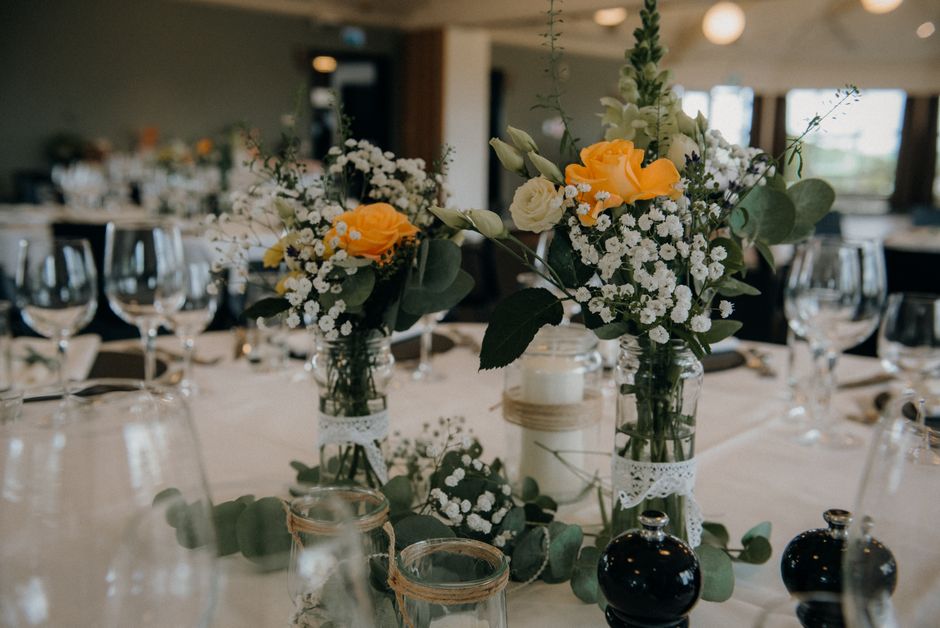
- Reception flowers such as table centrepieces and larger statement arrangements.
That layered approach keeps things coherent. It also helps you spend money where guests will actually notice it.
Key Benefits and Practical Advantages
The right wedding flowers do a lot of work quietly. They soften hard edges, create colour continuity, and help every part of the day feel connected. Here are the practical advantages couples usually appreciate most.
- Better visual flow: the bridal bouquet, bridesmaid flowers, and table pieces feel like part of one design.
- Stronger photos: flowers frame faces, fill empty corners, and add depth to images.
- More venue flexibility: even a simple setting can feel polished with the right floral structure.
- Clearer budget control: choosing a few high-impact pieces often works better than spreading the budget too thin.
- Seasonal value: flowers in season usually give better freshness and a more natural look.
- Personal expression: colours and flower choices can reflect your story, style, or cultural preferences.
There is another benefit that gets overlooked: flowers help people feel the day. Not in a dramatic way. In a subtle one. The scent when the bridal bouquet is first opened, the softness of roses near the table, the neatness of a buttonhole pinned before the ceremony. Tiny moments, but they matter.
If you want more variety for gifts or add-on arrangements around the same postcode, a local flower delivery service in Seven Sisters can be useful for pre-wedding surprises, thank-you flowers, or post-event gifting.
Who This Is For and When It Makes Sense
This guide is for couples planning a wedding or civil celebration around Chestnuts Park, Seven Sisters, and nearby North London areas, but it also helps family members, wedding coordinators, and anyone helping with the flower decision. If you are the sort of person who has looked at ten bouquets and thought, "They all look lovely, but which one actually suits the day?" then yes, this is for you.
It makes particular sense if you are:
- planning a local ceremony or reception and want low-stress delivery;
- working with a realistic budget and need to prioritise the most visible flower pieces;
- choosing flowers for a park-inspired, city-romantic, or modern London wedding;
- trying to match flowers to photography, attire, and venue layout;
- needing buttonholes, bridesmaid bouquets, and table flowers to work as one set;
- shortlisting options and comparing style, cost, and practicality.
It is also a good fit if you are not fully sure what you want yet. Truth be told, a lot of couples start there. One partner has a colour in mind, the other wants "something elegant but not fussy," and the rest gets sorted out through examples. That is normal.
Step-by-Step Guidance
Here is a simple way to plan wedding flowers without spiralling into decision fatigue.
1. Start with the setting
Look at where the flowers will actually be seen. Chestnuts Park style celebrations can feel open and natural, while nearby indoor spaces may need more structure. Bright daylight can flatten pale flowers, so texture and contrast matter more than people think.
2. Choose your core palette
Pick two or three main shades and one supporting tone. For example, white and green with a soft blush accent. Or deep reds with ivory and a little foliage. Keeping the palette controlled makes the whole wedding look more intentional.
3. Select the hero flowers
Your bouquet and key arrangement are the design anchors. If the bridal bouquet is elegant and balanced, the smaller pieces can echo it without copying it exactly. Popular choices for weddings include roses, lilies, orchids, lisianthus, chrysanthemums, and seasonal mixed stems.
4. Decide on the support pieces
Buttonholes, bridesmaid bouquets, and table arrangements do not need to be identical to the bridal flowers, just coordinated. That distinction matters. Matching too rigidly can make everything look stiff.
5. Confirm delivery and setup
Agree who receives the flowers, where they are placed, and how much time is needed before the ceremony. If there is a photographer arriving early, flowers should be ready before the first group shots. A last-minute handover in the rain is not ideal. Nobody wants that little panic.
6. Review the finishing details
Think about ribbon, vase choice, table height, and whether any flowers need to be extra durable. Some blooms look wonderful but bruise quickly. Others travel brilliantly but open more slowly. That trade-off is worth checking before you commit.
A useful rule of thumb: make the highest-budget pieces the most visible ones. That usually means bridal bouquet first, then ceremony focal flowers, then table arrangements. If budget is tight, reduce the number of arrangements rather than making all of them smaller. Guests notice quality faster than quantity.
Expert Tips for Better Results
After plenty of wedding planning conversations, a few patterns become very clear. The best results tend to come from couples who make decisions in the right order and keep the design slightly flexible.
- Think in photos, not just stems. A bouquet may look beautiful in the hand but disappear against a bright dress or a busy background. Ask how it will read in pictures.
- Use texture to make simple palettes feel rich. Mixing roses with smaller filler flowers and foliage often gives more depth than relying on one bloom type alone.
- Keep one element consistent. That might be ribbon colour, flower family, or foliage style. It helps everything feel connected.
- Choose durable blooms for travel. If flowers need to move between locations, sturdier stems are usually safer.
- Leave room for seasonal variation. If a specific flower is unavailable, a skilled florist can substitute something similar without changing the whole look.
And yes, ask to see examples of the bouquet style before you commit. You do not need to be a flower expert. You just need enough clarity to say, "This feels right," or "No, a bit too much," which is often the real decision anyway.
If you are looking for wedding-ready items rather than fully bespoke design, browsing a curated collection such as wedding flowers and accessories can help you understand what combinations are available, from bouquets through to buttonholes and table pieces.
Common Mistakes to Avoid
It is easy to get swept up in colour inspiration and forget the practical stuff. Happens all the time. These are the mistakes that usually cause avoidable stress.
- Choosing flowers without considering the venue light. Very pale arrangements can disappear in strong daylight, while dark flowers can feel heavy in a small room.
- Ordering too many separate designs. Too much variety can make the day feel disconnected and can stretch the budget.
- Leaving delivery too late. Flowers need time to be placed properly, especially if there are multiple locations or photography schedules.
- Ignoring seasonality. If a bloom is out of season, it may cost more or arrive less reliably.
- Forgetting the supporting pieces. A beautiful bridal bouquet can feel isolated if the buttonholes and table flowers clash.
- Not checking scale. Tiny arrangements can vanish on large tables; oversized pieces can overwhelm a small setting.
One common slip is trying to make every arrangement the star of the show. That sounds glamorous, but it can turn the day into visual noise. Better to let one or two pieces lead and allow the others to support them quietly.
There is also the "it looked amazing on Instagram" trap. Fair enough, inspiration is useful. But a bouquet designed for a sweeping manor staircase may not translate to Chestnuts Park or a local Seven Sisters ceremony. Different setting, different job.
Tools, Resources and Recommendations
You do not need a huge toolkit to plan wedding flowers well, but a few practical resources make decisions easier.
- Colour swatches or fabric samples: helpful for matching dresses, ties, ribbons, and table decor.
- Venue photos: especially useful if you are deciding on arrangement height and size.
- Guest table plan: lets you work out where larger centrepieces make sense and where simpler pieces are better.
- Flower reference images: use a small, curated set rather than twenty mixed screenshots.
- Delivery checklist: confirms who signs for the flowers, where they go, and when setup happens.
For product ideas, it helps to compare bouquet and arrangement types directly. A bridal bouquet is personal and often more detailed. A bridesmaid bouquet is usually lighter and simpler. Buttonholes should be neat and secure. Table flowers need balance and height control. Those distinctions matter more than people expect.
If you are comparing other everyday flower services for the same area, a local florist in Seven Sisters can also support pre-wedding consultations, sample styles, and additional event flowers.
Law, Compliance, Standards, or Best Practice
For wedding flowers, there is usually no special legal issue around the flowers themselves, but there are still sensible standards and best practices to follow. The most important ones are practical rather than bureaucratic.
First, delivery and access. If flowers are being brought to a public park area or a venue with shared access, make sure arrangements for unloading, time windows, and reception handover are clear. In London, parking and access can be the bit that trips everyone up. It is not glamorous, but it is real.
Second, if your florist is handling setup in a venue, confirm responsibility. Who places the table arrangements? Who removes packaging? Who keeps transport water containers? A simple written agreement or order summary avoids the "I thought you were doing that" moment, which nobody enjoys.
Third, if flowers are used in spaces with candles, food service, or tight walkways, safety and layout matter. Keep stems stable, avoid blocking routes, and do not overfill tables. That is good practice and good manners.
Finally, review the florist's basic policies. Delivery, substitutions, refunds, and payment terms should be clear. If you are also ordering add-ons, check the shop terms and delivery guidance before finalising everything. It sounds tedious. It is. Still worth it.
For general service details, you may also find it useful to review the site's delivery information, terms and conditions, and returns and refund policy before placing wedding-related orders.
Options, Methods, or Comparison Table
There is no single right way to design wedding flowers. The best option depends on the ceremony style, budget, and how much visual impact you want. Here is a useful comparison.
| Option | Best for | Strengths | Trade-offs |
|---|---|---|---|
| Bridal bouquet-led approach | Couples who want a strong focal point | Elegant, easy to style, photo-friendly | Less impact if the rest of the flowers are too plain |
| Full wedding package | Couples wanting consistency across the day | Coordinated look, easier planning | Can cost more if every element is upgraded |
| Mixed flower styling | Couples who like texture and variety | Flexible, natural, visually rich | Needs careful colour control to avoid clutter |
| Minimal modern flowers | Smaller weddings or contemporary venues | Clean, stylish, often more budget-aware | Requires strong design choices so it does not look sparse |
If you are torn between styles, ask yourself one simple question: do you want the flowers to be a feature, or to frame the day quietly? Either answer is fine. The important thing is making the choice on purpose.
Case Study or Real-World Example
Here is a realistic example from a local-style planning scenario. A couple planning a wedding near Seven Sisters wanted flowers that felt romantic but not overly formal. Their ceremony space had plenty of daylight, and they were expecting a mix of family photos, indoor greetings, and a small reception table setup.
Instead of ordering lots of different designs, they kept things focused. The bridal bouquet used soft white and blush tones with a little greenery. Bridesmaid bouquets echoed the same palette but were smaller and lighter. Buttonholes were kept clean and simple. For the tables, they chose low arrangements so guests could actually talk across them without peering around stems.
The result was calm, coherent, and easy to manage. Nothing looked forced. The photos felt cohesive because the flowers repeated the same family of shapes and colours. That is often the sweet spot: enough variation to feel special, not so much that it becomes overworked.
One thing they were glad they did? Allow a small backup window for delivery. Weather and traffic can be a bit unpredictable in North London, and having that buffer removed a lot of pressure on the morning. A small detail, but a big sigh of relief.
Practical Checklist
Use this checklist to keep your planning grounded and avoid those last-minute flower scrambles.
- Choose a core colour palette of two or three main shades.
- Decide which flower piece matters most: bouquet, table flowers, or ceremony focal design.
- Confirm venue size, lighting, and access times.
- Check which flowers are in season or easy to source reliably.
- Match bridal, bridesmaid, and buttonhole designs so they feel related.
- Confirm delivery time, recipient, and setup responsibility.
- Keep table arrangements scaled to guest flow and sight lines.
- Review budget priorities before adding extras.
- Ask about substitutions in case a bloom is unavailable.
- Make sure payment, refund, and delivery terms are clear.
Quick reminder: if a choice sounds lovely but creates stress on the day, it is probably not the right choice. Weddings are busy enough.
Conclusion
Chestnuts Park wedding flowers for Seven Sisters work best when the design matches the setting, the timing, and the practical flow of the day. That is really the heart of it. Beautiful flowers matter, of course, but the best wedding flowers also behave well: they travel neatly, photograph beautifully, and hold together from the first look to the final toast.
If you keep your decisions simple, seasonal, and consistent, you will usually get a better result than trying to do everything at once. Start with the venue, choose a clear palette, and build from the bouquet outward. That approach gives you a coherent look without the stress spiral. And honestly, that is half the battle.
Get a free quote today and see how much you can save.
Frequently Asked Questions
What flowers work best for a Chestnuts Park wedding in Seven Sisters?
Roses, lisianthus, lilies, orchids, chrysanthemums, and seasonal mixed blooms are all strong options. The best choice depends on your colour palette, budget, and how formal you want the day to feel.
How far in advance should I book wedding flowers?
As soon as you have your date and venue details, ideally. Popular wedding dates go quickly, and booking earlier gives you more flexibility with style, seasonality, and delivery planning.
Can wedding flowers be kept simple and still look elegant?
Absolutely. A simple bridal bouquet, neat buttonholes, and a few well-placed table arrangements can look more refined than a crowded mix of different styles.
How do I choose wedding flowers that match my dress?
Look at the dress fabric, neckline, and overall tone. Clean whites, ivory, blush, or green-focused arrangements often work well, but the exact match depends on the dress shade and your photography style.
What is the difference between a bridal bouquet and a bridesmaid bouquet?
A bridal bouquet is usually larger, more detailed, and designed as the main floral feature. Bridesmaid bouquets are typically smaller and lighter so they complement the bride without competing with her.
Are seasonal flowers better for weddings?
Usually, yes. Seasonal flowers are often easier to source, can look fresher, and tend to suit the time of year more naturally. That said, many florists can suggest good alternatives if a specific bloom is unavailable.
Do I need table flowers if I already have a bouquet?
Not always. If budget is tight, you can prioritise the bouquet and key ceremony pieces first. Table flowers help create atmosphere, but they are not always essential for a smaller wedding.
How do I stop flowers looking too crowded?
Stick to one or two dominant flower types and use foliage or smaller filler blooms to support them. Also make sure the arrangement size suits the table or space it will sit in.
What should I ask the florist before ordering?
Ask about flower availability, substitutions, delivery timing, setup responsibility, payment terms, and what happens if your chosen bloom is out of season. Those questions save hassle later.
Can I use the same flowers for the ceremony and reception?
Yes, and that is often a smart way to make the most of your budget. The key is making sure the arrangements can be moved safely and still look good in both spaces.
What if I am not sure what style I want yet?
Start with a few reference images, a colour direction, and the venue details. You do not need to know every stem. A good florist can usually narrow it down with you quite quickly.
How do local delivery details affect wedding flowers in Seven Sisters?
They matter a lot more than people think. Traffic, parking, access windows, and who receives the flowers can all affect how smoothly the day starts, so clear planning is worth it.
Should I choose low or tall arrangements for tables?
Low arrangements are often easier for conversation and work well in many wedding settings. Tall arrangements can look dramatic, but they need the right space and sight-line planning.
What is the safest way to keep wedding flower planning stress-free?
Keep the design focused, confirm the logistics early, and decide what matters most. If the bouquet, delivery, and key table pieces are handled well, the rest usually falls into place nicely.